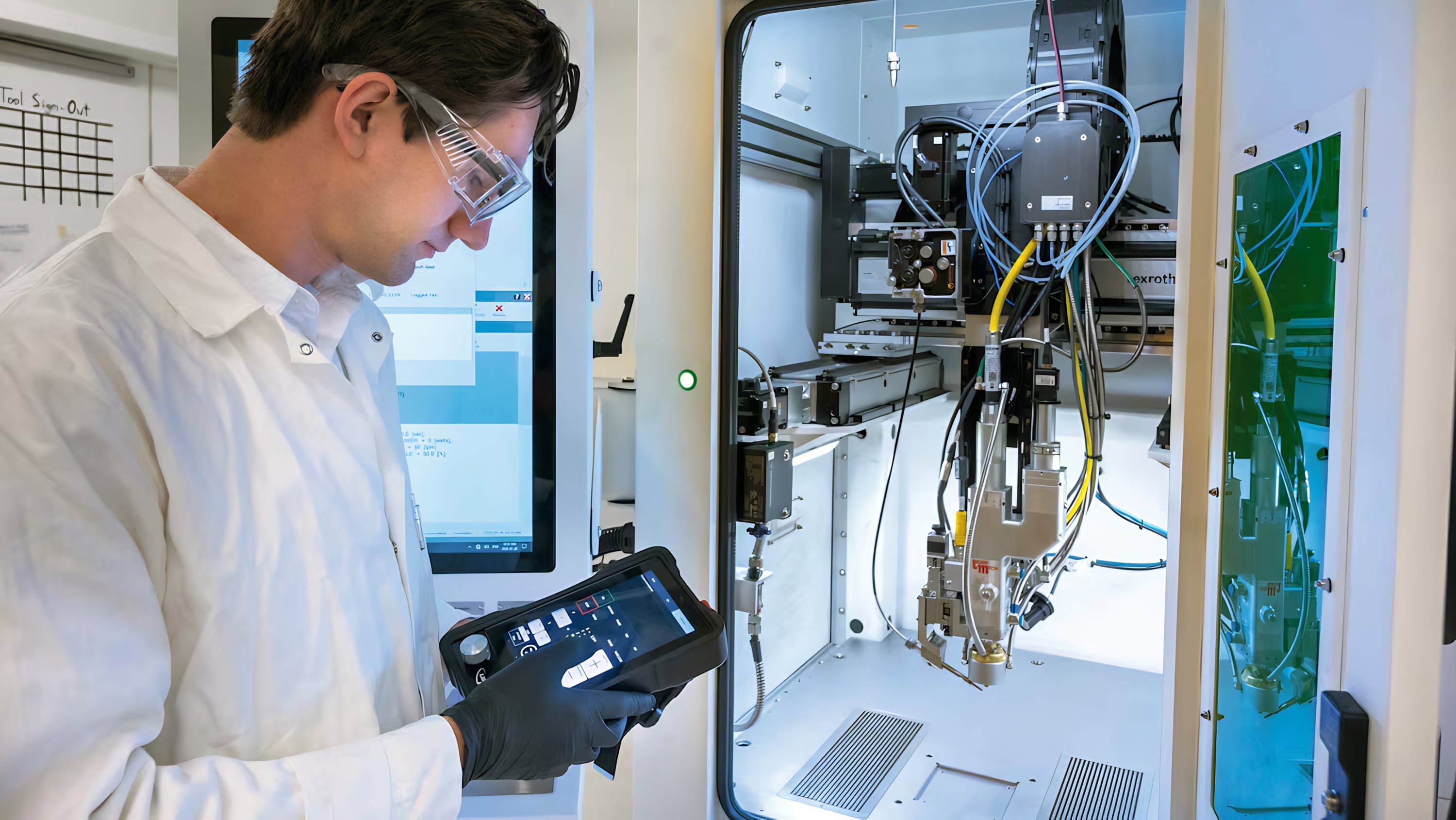
The Edmonton region is building on its position as a strategically located northern innovation and logistics powerhouse, and the backbone of the Western Canadian economy, to advance the region as a defence, security and dual-use technology hub.
Following the announcement of Prime Minister Mark Carney's new $6.6-billion Buy Canadian plan to supply the military and grow Canada’s domestic defence industry, the Edmonton Region Defence Alliance (ERDA) was launched as a co-ordinated partnership led by the University of Alberta, Northern Alberta Institute of Technology (NAIT), Edmonton Global, Alberta’s Industrial Heartland, and Edmonton International Airport (YEG). ERDA leverages the Edmonton region’s strategic location, industrial readiness, resources, talent and grit to meet the needs of the Buy Canadian Plan and protect Canadian sovereignty by reducing foreign dependence.
“The University of Alberta is proud to be a founding member of the Edmonton Region Defence Alliance, a partnership that leverages our region’s unique industrial and geographic advantages to protect Canadian sovereignty,” says Aminah Robinson Fayek, U of A vice-president (research). “We are committed to supporting Canada’s defence and security priorities through world-class research, innovation and talent development collaboratively with our indigenous, military and industrial communities.”
As the closest major city to Canada’s Arctic, Edmonton serves as a continental logistics hub. The Edmonton International Airport is formalizing its role as the planned location of the Western Main Operating Base (MOB-West) for the Royal Canadian Air Force’s CC-330 Husky fleet, critically extending defence operations for CFB Edmonton, CFB Wainwright and 4 Wing Cold Lake, strengthening our position as the gateway to the North.
To further support defence and logistics, Port Alberta — a major regional inland port development opportunity — will enhance existing transportation and supply chain solutions to connect Alberta's economy to worldwide markets.
Anchoring the alliance is Alberta’s Industrial Heartland — the country’s largest energy, plastics and petrochemical cluster — and Nisku Industrial Park, North America’s second-largest industrial fabrication zone, as well as a highly educated workforce, including one in five of Canada’s engineers who deliver some of the largest infrastructure projects in North America.
NAIT and the U of A will continue to play a leading role in educating and equipping the nation’s youngest, fastest-growing talent pool. Consistently ranked in Canada’s top three research colleges, NAIT is leading the technical scaling of a futuristic workforce as evident from its reputation for turning complex defence concepts into prototypes and manufactured goods.
As the province’s bedrock of innovation, the U of A joins the alliance with an international reputation as an artificial intelligence powerhouse. It is also designated as a NATO Defence Innovation Accelerator for the North Atlantic (DIANA) test centre, and is home to Canada’s only university research centre dedicated to defence and dual-use technologies: the Centre for Applied Research in Dual-use Defence Technologies. CARDD-Tech currently operates more than $25 million in defence projects.
In addition to all this, the region has a long military history and currently supports 12,000 Canadian Armed Forces (CAF) personnel across CFB Edmonton, Wainwright, Suffield and 4 Wing Cold Lake.
“We believe co-locating the CAF, industry and academia in secure innovation environments is key to advancing sovereign defence technologies,” says Ian Smith, director of business development in the U of A’s Faculty of Engineering. “Add to this a regional ecosystem, and you have something rare: a region where new technology can move from idea to product within a few city blocks.”
Eleanor Olszewski, minister of emergency management and community resilience and
minister responsible for Prairies Economic Development Canada, says she’s proud to see her home city launching a new defence alliance that aligns with Canada’s federal Defence Industrial Strategy.
“The world is changing, and cities like Edmonton must shift gears to meet the moment, positioning themselves at the forefront of evolving supply chains and global uncertainty,” the minister says.
“Now is the time to invest in our military capacity, and this initiative will play a key role in building both Edmonton and Canada strong.”