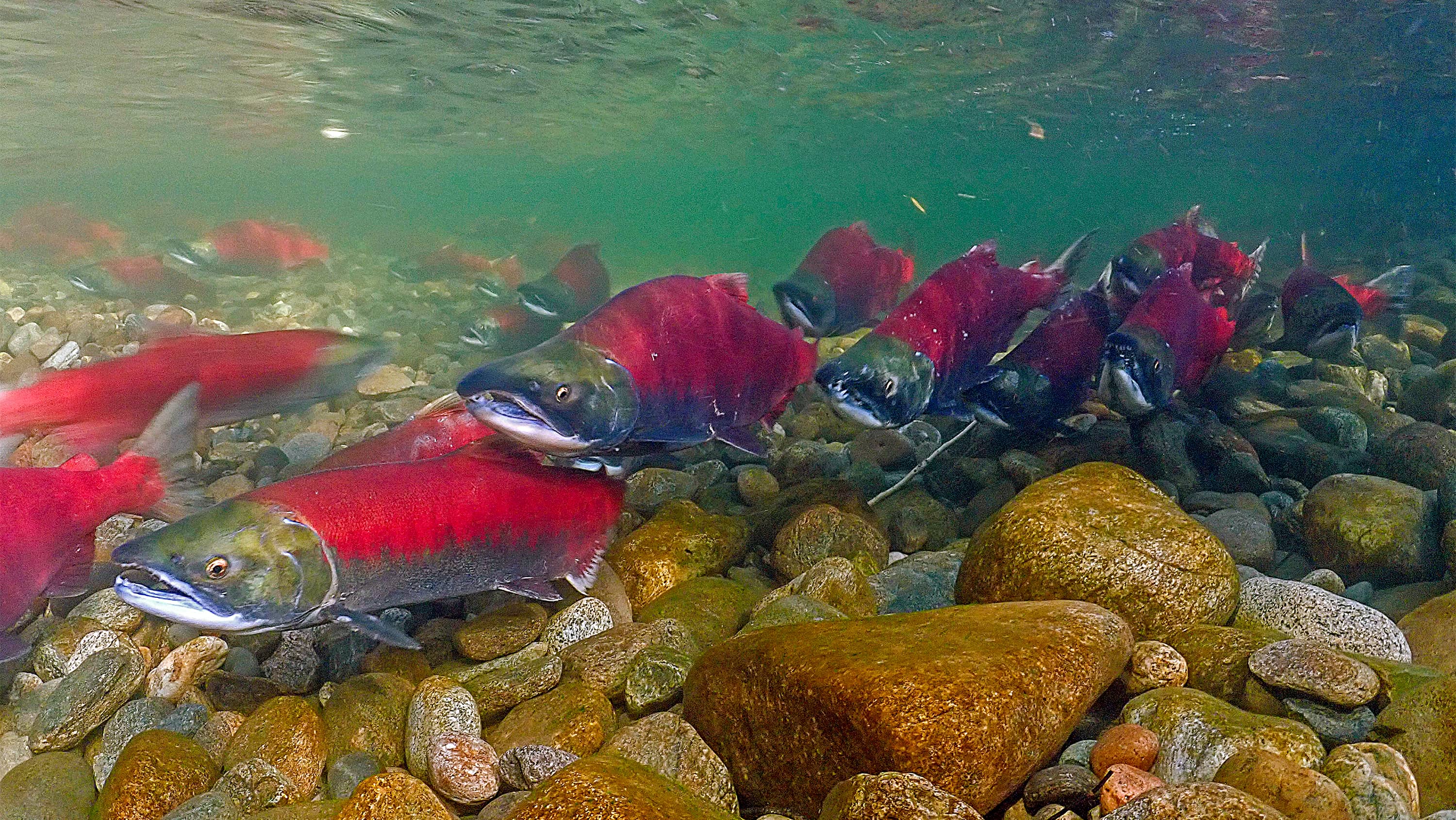
A University of Alberta biologist is leading research looking at how microplastics affect fish that are vital to Canada’s environment and economy — and how these species might serve as an early-warning system that could help prevent and address further ecological damage.
“Microplastics are now found everywhere, from polar regions to the deep ocean,” says Daniel Barreda, a professor in the Faculty of Science and the Faculty of Agricultural, Life & Environmental Sciences. “In fish, these particles can reduce food intake, damage tissues, trigger inflammation, weaken immune defences and increase vulnerability to disease.”
But as Barreda explains, the biological mechanisms driving these effects remain poorly understood. To help address that knowledge gap, he and his team have been awarded a $600,000 grant over three years from the Natural Sciences and Engineering Research Council and Environment and Climate Change Canada.
“Our goal is to move beyond documenting the presence of microplastics and determine how they affect health,” he says.
The study will focus on salmonids — a family of fish that includes salmon, trout, char and whitefish — because of their major ecological, economic and cultural importance in Canada. “They are also deeply interwoven with Indigenous cultural identities, traditional knowledge systems and stewardship,” Barreda points out.
Working together with Justice Asomaning and Jeremiah Bryksa at the Northern Alberta Institute of Technology (NAIT), who have long-standing expertise in microplastics research, Barreda’s team will analyze controlled microplastic exposures in fish to pinpoint specific health effects of the tiny plastic particles, with a focus on immune suppression and organ dysfunction. The researchers will take advantage of the U of A’s recently renovated aquatic research facility, as well as NAIT’s Productivity and Innovation Centre, a 190,000-square-foot facility equipped with advanced analytical chemistry tools.
“A unique aspect of this research is that we are focusing on tissues that can act as both targets of microplastic damage and early-warning sensors of contamination,” Barreda notes. “This approach should allow us not only to better understand toxicological effects, but also to identify biological indicators that may help detect environmental impacts earlier.”
Barreda says improving our ability to detect the biological impact of microplastics before visible, population-level damage occurs will benefit fish conservation at every level from local to national.
To that end, the team is working on developing microplastic “biosensor” tests that are compatible with techniques and equipment already available in many community and small-scale labs. The idea is to make microplastic monitoring more accessible to community groups and local partners interested in evaluating and improving the health of local aquatic ecosystems.
“Healthy lakes, rivers, and coastal environments are essential not only for biodiversity and ecological balance, but also for fisheries, aquaculture, recreation, tourism, and many communities whose cultural identities are closely tied to water and fish,” Barreda emphasizes.
“This research is ultimately about helping Canada better understand and respond to one of the fastest-growing environmental challenges facing aquatic ecosystems.”