From internships to innovation
Donna McKinnon - 12 December 2025
From internships to innovation
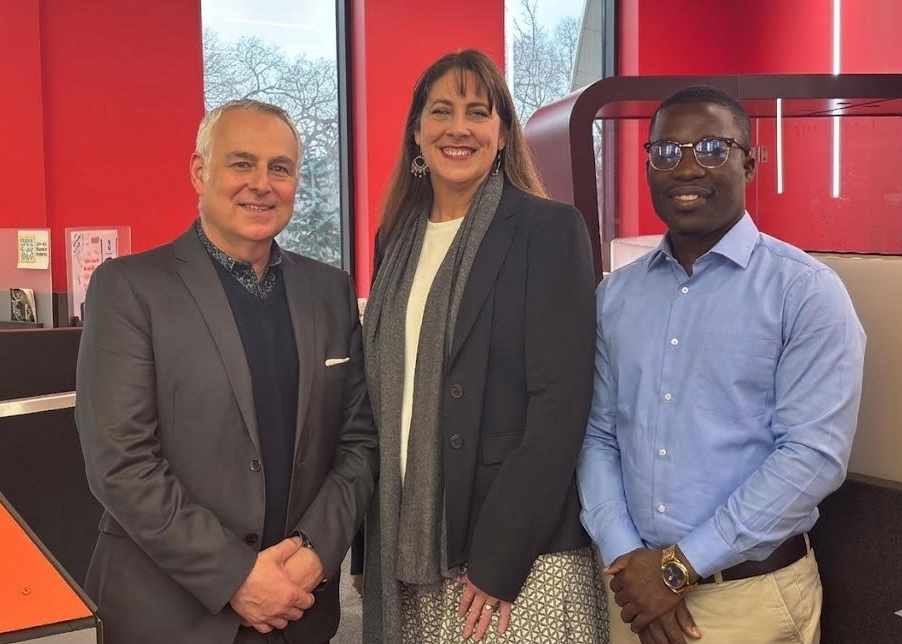
See how Mario Debenedetto, Deborah Fox and Arnold Johnson are injecting energy into the Faculty of Science’s experiential learning programs
The Faculty of Science's experiential and work-integrated learning programs are set for an exciting phase of growth, thanks to the addition of three new team members. Individually and collectively, they have infused the faculty’s programs with renewed enthusiasm and expanded capacity to serve students interested in enhancing their degree through practical, real-world experiences.
Mario Debenedetto, who joined the Faculty of Science as the new industry relations coordinator, is helping students access paid, full-time work terms across a broad spectrum of employers, ranging from start-ups and government labs to major industry partners in fields like biotechnology, computing, environmental science and analytics.
“It’s hands-on and very student-centred which is why most students connect with our Science Internship Program (SIP) team directly,” says Debenedetto, who began his role in September and is also a proud U of A alumni (‘88 BEduc).
“Once a student decides they are ready for an optional internship, we walk them through the process: preparing their resume, strengthening their interview skills and helping them navigate the postings on our SIP job board. From there, we support them through applications, interviews and accepting an offer.”
Debenedetto says his favourite internships are those where students are trusted to contribute real work, not just observe — the type of role, he explains, that builds new skills, new confidence and a better understanding of career goals.
“Experiential learning lets students take what they’ve learned in class and helps them see how their skills fit into the world. It’s that moment when things “click” — when students see a career path or interest come to life in a way a lecture may not deliver. Seeing a student grow in this way and helping them to realize, “I can actually do this,” is incredibly rewarding!”
If curiosity is the engine of science there is no place better to exercise and nurture that inquisitiveness than the Student Innovation Centre (SIC) — a collaborative workspace for interdisciplinary student innovators.
As coordinator of programming, operations and student engagement, Arnold Johnson, who began in June, brings extensive international experience to his new role. Most notably, he worked with the Ghana Investment Fund for Electronic Communications (under the Communications Ministry of Ghana) in STEM education, IT systems and innovation leadership.
“What I love most so far is watching students come alive when they realize they can build something real,” says Johnson. “With the SIC as the launchpad, students walk in with curiosity and walk out with capability.”
Students are typically directed to the SIC, says Johnson, through instructor referrals, messages on Discord or, in many cases, student queries and walk-ins. Once there, they have access to specialized workshops, micro-credientials, bookable collaborations and meeting spaces, digital tools and equipment for projects, interdisciplinary innovation challenges like the Clean Tech Sustainability Challenge, and connections to industry experts and partners.
Johnson stresses that students do not need to be an inventor or a tech person to see the SIC as their space. “Innovation starts with trying,” he says. “Mistakes are welcome. Questions are encouraged. I’m here to help students discover their creativity, build meaningful projects and step confidently into the future they envision.”
The success of a student’s journey is defined not only by what they learn and experience but also what they contribute. The faculty’s strong commitment to providing opportunities for students to give back is demonstrated through initiatives like the Science Mentorship Program, managed by student engagement specialist Deborah Fox, who like Johnson, joined the faculty in June.
A former high school teacher from California, Fox, like Debenedetto and Johnson, is a strong believer in the importance of learning opportunities outside of the classroom. It’s these experiences, she says, that provide students with a deeper connection to what they've learned, while also leaving them with a better understanding of themselves — of skills they maybe didn't know they had, and of things that they feel passionate about and want to pursue in the future.
In her role as the engagement specialist, Fox pairs incoming students with upper-year volunteer student mentors. Both mentors and mentees build their communication and leadership skills, and as Fox notes, develop cultural competency from engaging with students from different backgrounds. Students also benefit from professional development and volunteer opportunities embedded within the program.
“Chatting with students about why they signed up to be science mentors is always heartwarming,” she says. “They describe how they want to pass on the wonderful support they had or provide the guidance that would've been helpful when they first began their program. My cheeks are often sore after conducting mentor interviews because the students make me smile so much!”
The mentorship program is open to students from across the faculty which Fox says contributes to a community-wide sense of belonging for all students, regardless of their home department and major.
For Debenedetto, Johnson and Fox, experiential learning is crucial for academic and personal growth, and each defines success in their roles as a student who leaves with confidence and career-ready skills.
Helping students to become well-rounded individuals is a principle they apply in their own lives as well.
Outside of work, Debenedetto enjoys spending time with family (including two dogs) on camping trips, exploring new places, listening to 80s music, cooking and various sporting activities.
In alignment with his new role, Johnson, on the other hand, loves prototyping, robotics education, community-building and exploring Edmonton’s innovation spaces.
Fox says being outdoors, gardening, hiking and bird-watching bring her joy, but when it gets too cold, you can find her at home with hot tea and a cat in her lap.
To learn more about the Faculty of Science experiential and work-integrated learning programs, please visit our website.
For more information about the faculty’s study abroad opportunities, please visit International Education + Enrolment.