New assistant professor Kathleen Munley aims to examine how the environment, brain and hormones shape social behaviour
2 January 2026
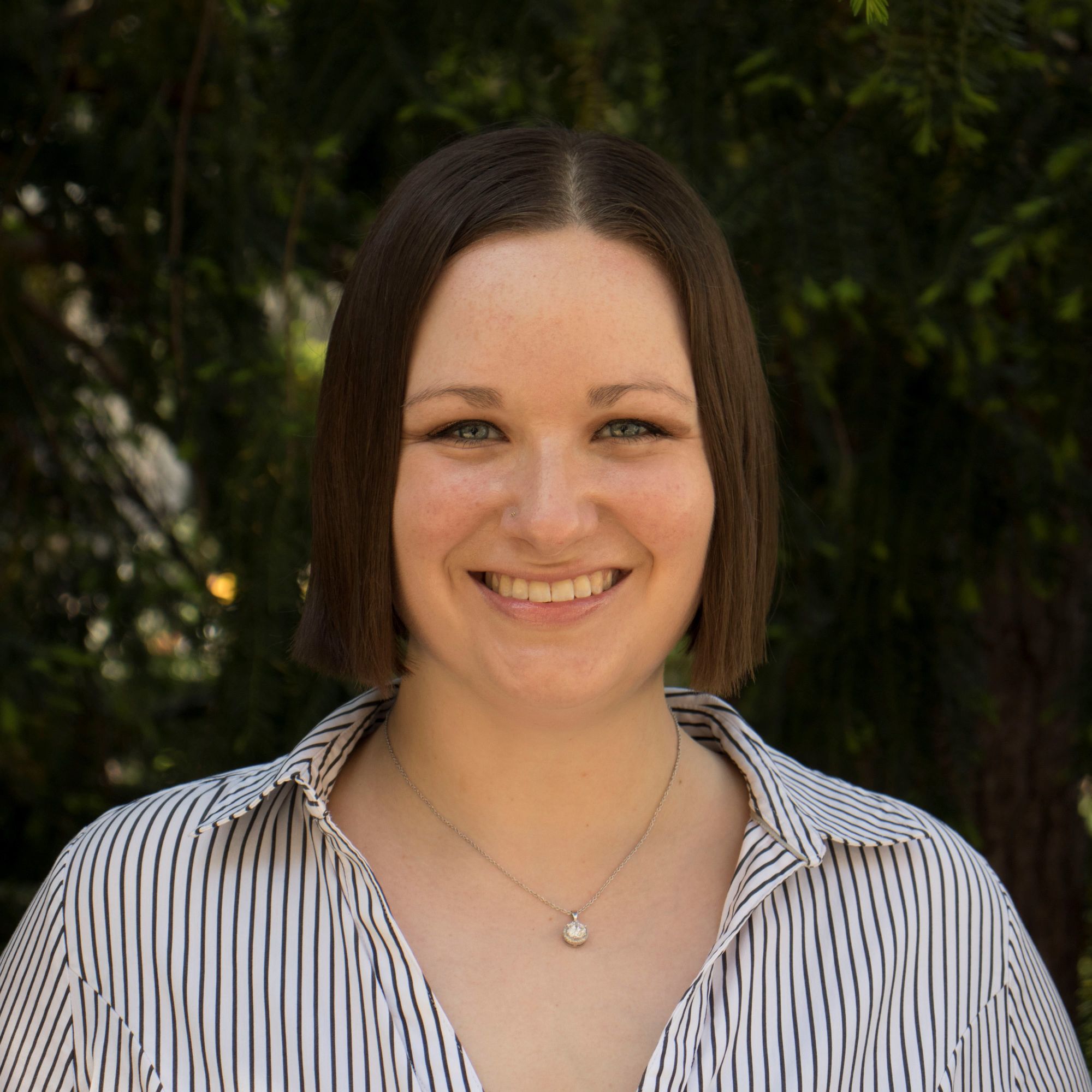
Some believe that the interests we develop as a child never really go away. New assistant professor in the Faculty of Science’s Department of Psychology Kathleen (Kat) Munley is living proof of that. After frequenting an aquarium as a child and subsequently undertaking courses that fueled her passion for aquatic species, she continues to tap into her early upbringing with a curiosity that remains unfailingly strong.
Keep reading to get to know Kat Munley better.
What brought you to the University of Alberta?
As an endocrinologist, neuroscientist and animal behaviour enthusiast, the University of Alberta is an excellent place to start my research program. My home department, the Department of Psychology, contains a vibrant community of researchers studying diverse topics in behaviour, learning, cognition and decision-making in a suite of different systems, from animals to humans. I am one of four faculty members in the Comparative Cognition and Behaviour research group in the department, which studies social behaviour and cognition and their underlying mechanisms in non-traditional animal models (fishes and songbirds). We are a small but mighty group of scientists that are widely recognized for our work on both a national and global scale.
Additionally, I am a member of the Neuroscience and Mental Health Institute (NMHI) at the U of A. NMHI is a multi-faculty, interdepartmental institute that brings together scientists and clinicians at the U of A who study the brain and nervous system. This institute is highly collaborative and offers its own undergraduate and graduate programs and events, and it has allowed me to meet neuroscientists all across campus.
Finally, I was drawn to the University of Alberta because it has a great community of researchers who study fish across several departments, including Psychology and Biological Sciences. The U of A also has a state-of-the-art, centralized aquatics facility in the Biological Sciences Building, which is run by North Campus Animal Services (NCAS). This facility is truly one of a kind; I’ve studied fish in a research setting for over a decade, and the University of Alberta is the only institution I know of that offers a facility exclusively for aquatic animals. Moreover, this facility has an excellent group of animal care staff, who are experts in fish care and husbandry. My lab is very spoiled in that regard!
Tell us a bit about your research program. What will you be studying?
Broadly, I am interested in how environmental context is integrated via the brain and endocrine system (the network of glands and organs in the body that release hormones) to regulate social behaviour. My lab, the Seasonal and Social Neuroendocrinology (SeaSoN) lab, addresses this topic by studying how the social environment and seasonal factors control “flexible” social behaviours, specifically those displayed by individuals who have a particular social status (or rank) within dominance hierarchies. In other words, we want to know how hormones and the brain make a dominant individual “dominant” and a subordinate individual “subordinate,” and how this social plasticity is modulated by an animal’s external environment. To investigate these mechanisms, we pair behavioural assays with state-of-the-art genetic, molecular and endocrine tools, including CRISPR/Cas9 gene editing, transcriptomics, neuroanatomy and metabolomics.
Our model system is cichlid fishes, a group of ~1,600 species that exhibits extraordinary diversity in social structures and life-history strategies. If you Google “cichlids,” some images you find may look familiar, as they are popular aquarium fish due to their bright colouration! In my lab, we study social plasticity using a comparative framework, in which we compare these mechanisms and behaviours across three different species of African and Neotropical cichlid fishes. This comparative approach allows us to address key questions not only about how hormones and the brain regulate social status within a species (e.g., in males and females), but also about how these mechanisms have evolved across species.
What inspired you to enter this field?
I’ve been interested in science (especially marine biology) for as long as I can remember. I grew up in a small rural farm town in western Maryland (in the United States), and my parents would frequently take my sister and me to Baltimore to visit the National Aquarium, which was my favorite place in the world as a child. My fascination with aquatic animals never changed, and my first science-related job was volunteering at that same aquarium, where I fell in love with marine biology as a high school student.
I received my BSc in marine biology and my BA in creative writing from the University of Miami, where I was a research assistant in an aquatic toxicology and comparative physiology lab for three years. After starting graduate school at Louisiana State University and continuing to pursue my interests in comparative physiology and aquatic toxicology, I took my first courses in behavioural neuroscience and neuroethology and became fascinated by how hormones control the brain and behaviour. I switched fields to behavioural neuroendocrinology, which I studied during my PhD at Indiana University and my postdoc at the University of California Los Angeles.
Something that I think is intriguing about my field, and what never ceases to amaze me, is how complex the neural and endocrine mechanisms that regulate social behaviours (like aggression, reproduction and parental care) are. Some of these behaviours may seem straightforward, but below the surface, it’s an entirely different story. What’s incredible about these mechanisms is, despite their complexity, they are quite dynamic and can oftentimes change rapidly, within hours or even minutes! It’s a truly remarkable system that we still have so much to learn about.
Tell us about your teaching. What courses will you be teaching, or what is your philosophy when it comes to teaching?
The short answer is: all things “brainy.” Currently, I am teaching two undergraduate courses in behavioural neuroscience and genetics in the Department of Psychology: Brain and Behaviour (PSYCH 275) and Behaviour & Genetics (PSYCH 372). In addition, I am developing a dual upper-level undergraduate/graduate course in behavioural endocrinology, which will discuss interactions among hormones, the brain, and behaviour in animals and humans. My goal is for this course to be offered starting in the 2027-2028 academic year.
Is there anything else you'd like to share?
To read more about my research, check out my lab website and Google Scholar page. I am also actively recruiting graduate students via the Graduate Program in Psychology and the Graduate Program in Neuroscience, so please reach out if you’re interested in endocrinology, animal behaviour, neuroscience or seasonal biology!