Fall Convocation 2025: MD Samiul Islam
Donna McKinnon - 18 November 2025
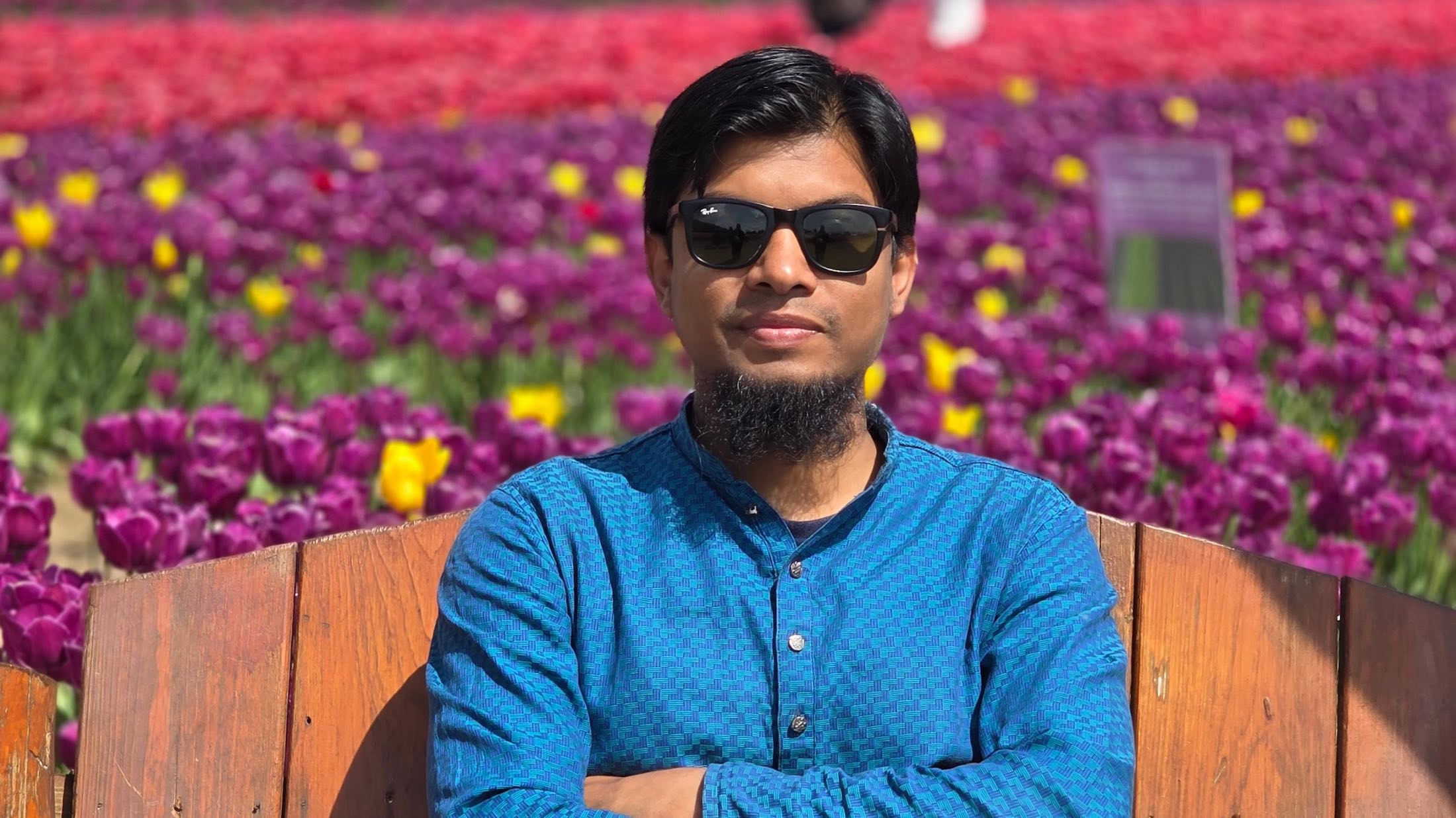
MD Samiul Islam
PhD, Computing Science
How a shift from working hard to working smart reshaped PhD student's academic journey.
In the first two years of his PhD program in computing science, MD Samiul Islam wasn’t struggling academically, but the unexpected slow pace of his research output — resulting in one paper during that time — was a source of deep frustration.
The solution? Being intentional with adopting a strategic approach that saw him move from working hard to working smart — a concept he explains in detail below.
To say that this ambitious approach worked would be an understatement.
By the end of his PhD, Samiul had amassed a total of 13 published papers, including two that were a direct result of his collaboration with the National Institute for Space Research (INPE) in Brazil.
Samiul has actively participated in outreach programs, including, most notably, his role as a mentor and team leader with the Computing Research Association's UR2PhD initiative, inspiring undergraduates to pursue higher education in computing science. And as an entrepreneur committed to sustainable electronic recycling, he launched CellShoppe, a Canadian startup that directly applies his research expertise to create AI-powered software for the cell phone repair industry.
Currently exploring postdoctoral roles across Canada, Samiul’s vision is clear: he is deeply invested in the future of computing science and its capacity to deliver societal change — a commitment that encompasses his academic contributions and a genuine passion for the field in which he’s now earned his PhD.
Congratulations Samiul!
- What led you to choose this area of study, and why the U of A?
- My career aspiration has always been to be a researcher and academic in the dynamic fields of computing science, IT, data analytics, AI and machine learning. The potential of these technologies to solve real-world problems deeply fascinates me. I was actively seeking a doctoral program where I could not only flourish in research but also secure the necessary scholarship support to pursue ambitious work. The University of Alberta stood out immediately. Its global reputation for research excellence, particularly in computing science, coupled with a highly supportive environment for teamwork and academic development, made it the ideal place to turn my aspirations into reality.
- Tell us about your favourite professor and/or class.
- My favourite experience was the individual study course, CMPUT 605 - Topics in Computing Science, with Irene Cheng. She was instrumental in helping me bridge the gap between theoretical knowledge and practical application, particularly in advanced programming for AI and machine learning. Under her guidance, I was given an invaluable opportunity to work with an industry partner, where I could implement my specialized skills and expertise. Professor Irene’s constant encouragement and practical mentorship not only boosted my confidence but also shaped my understanding of what impactful, applied research truly looks like. Her guidance was a cornerstone of my PhD journey.
- Did you take on any leadership or volunteer roles while you were a student? If so, please share your experiences.
-
My PhD journey offered numerous opportunities for leadership, particularly in fostering interdisciplinary and international collaboration and directly mentoring the next generation of researchers. Supervising students has always been a thrilling experience; it provides a fresh start to learn about teamwork and mentorship.
My leadership roles are best reflected in my contributions across campus and globally:
Mentorship: I was deeply involved in the Computing Research Association's (CRA) UR2PhD (Undergraduate Research to PhD) program, a prestigious initiative designed to encourage undergraduate students, especially those from underrepresented groups, to pursue higher studies in computing research. I first acted as a graduate mentor in 2024, leading a team of enthusiastic undergraduate researchers. I guided them on essential skills like developing research questions, performing literature reviews and preparing scholarly articles. Building on this success, I took on the role of a faculty mentor in 2025. Furthermore, I led an undergraduate student team in a competitive NSERC USRA project which successfully culminated in a peer-reviewed paper publication.
International Research Collaboration: I took the lead in working with a visiting scholar from the National Institute for Space Research (INPE) in Brazil. This involved negotiating access to and utilizing their valuable private dataset, which was crucial for two successful journal publications. This collaborative spirit is ongoing, focusing now on applying our joint research to precision agriculture.
Inter-Disciplinary Outreach: I led the presentation in the CAT-G project seminar, explaining to colleagues in the faculties of science and ALES how remote sensing can perfectly complement their agriculture and biological science research. This presentation actively strengthened the collaboration between our departments and opened doors for future funding opportunities.
Knowledge Mobilization: I was a key presenter in an outreach activity organized by the THINK Global School in Vancouver, where my teammate and I presented our research to a group of high school students. It was rewarding to inspire the next generation with the possibilities of remote sensing technology.
AI-Powered Sustainable Entrepreneurship: I have launched a new startup venture in Canada named CellShoppe focused on sustainable recycling and repair of electronic devices. This is not just a business — it's an initiative to protect the environment from being polluted by the overwhelming electronic wastage and a software innovation aimed at reshaping the phone repair industry. We are implementing cutting-edge AI and ML technology, leveraging my research expertise to create AI-powered cell phone repair industry software.
- Did you face any significant challenges while you were a student, and if so, how did you respond?
-
One of the most significant challenges I faced was the initial hurdle of publishing high-quality research papers. In the first two years of my PhD, despite relentless effort, I only managed to publish one paper. This was a frustrating period that required me to step back and re-evaluate my approach. I realized that hard work alone wasn't enough — I needed to switch to smart work. This meant developing a more strategic plan for my research, focusing on high-impact journals, and actively seeking out collaborative opportunities with experienced research teams both within the U of A and globally.
By the end of my PhD, this strategic shift had paid off immensely, resulting in a total of 13 published papers and a strong, global network of research partners. It taught me that sometimes, you need to change your path to reach your goal more effectively.
- What advice do you have for current or future students?
- My core advice is to prioritize smart work over mere hard work. Hard work can be relentless effort without direction, but smart work is hard work with a proper, flexible plan that keeps your final destination in sight. Be prepared to change your path when necessary — the journey of a master's or PhD is a dynamic process of learning, research and teamwork. My own experience is a testament to this: shifting my strategy led to a massive increase in publication output and a robust, worldwide research network. Remember, your program is a finite time for learning and building connections; actively connect with different research teams around the world and learn from their expertise. This journey isn't just about completing a thesis; it's about becoming a well-rounded, connected researcher.
- How do you plan on celebrating convocation?
-
Convocation marks the culmination of four years of intense, tiring, but incredibly rewarding hard work. It's truly a day for celebration, one that wouldn't be possible without the blessings of Almighty Allah and the unwavering support of my cherished network.
My wife and I will be attending the ceremony at the U of A, soaking in the moment and taking plenty of pictures to commemorate this milestone. Following the ceremony, we’ll be heading out for a celebratory party. It will be a well-deserved opportunity to reflect on the journey and share this success with the people who made it possible: my beloved mother and always encouraging father, my inspiring elder brother and his family, my heart-connecting wife who supported me through every hardship, my supervisor Irene Cheng and my dedicated Multimedia Research Centre (MRC) team members. This celebration is for all of us.
- What's next after graduation?
-
My immediate aim is to secure a postdoctoral opportunity at a Canadian university, which is the crucial next step towards my long-term goal of becoming an academic. This path allows me to continue impactful research and mentorship right here in Canada.
My research on satellite data analysis is extremely timely, aligning perfectly with Canada’s strategic priorities. I am driven to contribute to the Canadian economy through innovation, especially given the significant allocation in the federal budget towards defence and the emphasis on digital agriculture.
By leveraging these strategic national directions, I plan to ensure my research has a direct, positive impact on society. I already have a strong international team working together to publish in top-tier journals. Beyond my own research contributions, I am committed to the future of the field: I want to inspire and mentor young Canadians towards pursuing higher studies and entering the research industry, helping to build the next generation of innovators.