New assistant professor Quinn Lee hones in on understanding how brains and machines learn and remember in a changing world
8 January 2026
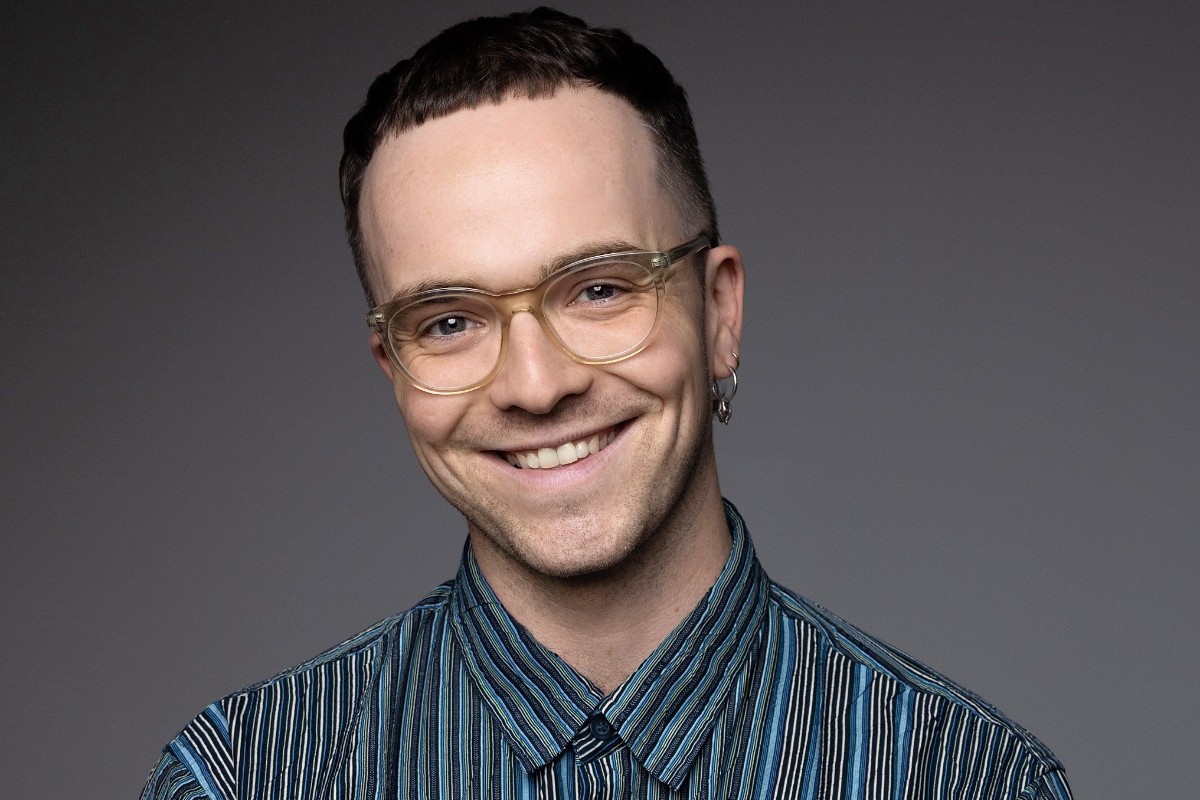
Quinn Lee, assistant professor in the Department of Psychology. (Photo submitted)
Quinn Lee, new assistant professor in the Faculty of Science’s Department of Psychology, isn’t shying away from how artificial intelligence is challenging how we think about the brain – in fact, he’s committed to addressing these challenges head on. In his new role, Lee leads the Navigation and Memory Systems (NMS) lab, and in addition to that, he’s also a fellow of Amii – the Alberta Machine Intelligence Institute, and is a CIFAR AI Research Chair. In the classroom, Lee is committed to teaching his students about the relevance in their daily lives of the research they will examine, while also encouraging self-guided discovery.
Keep reading to get to know Quinn Lee better.
What brought you to the University of Alberta?
The University of Alberta has a fantastic community of world-leading researchers working on topics that I am passionate about, from spatial navigation and memory to learning from experience in artificial systems. I was particularly eager to join this community as research in our group combines knowledge and research techniques from these disciplines, and I feel there is a unique open-mindedness to working across disciplines and asking big questions here. On top of that, being from the province I was thrilled to be back in this stunning part of the world and among the welcoming people that are here.
Tell us a bit about your research program. What will you be studying?
Research in the Navigation and Memory Systems Lab aims to understand how the brain represents the world around us to support navigation and memory, and how we can use brain-inspired solutions to address emerging challenges in AI. To this end, our group combines approaches from behavioral neuroscience, neurophysiology and machine learning to understand how biological and artificial agents learn to navigate a changing, dynamic world. We try to characterize how brains achieve this, and find ways to model this process in machines – both to better understand the brain and create better AI.
What inspired you to enter this field?
When I was an undergraduate student I was required to take an introductory course in neuroscience, and I fell in love with learning about brains after my first class. It was the most concrete framework to understand behavior that I had encountered, and I was hooked. Later on I was exposed to the sub-field of learning and memory, which became my favourite topic as it seemed to touch on all aspects of behavior, was rich in theory and full of debate (who doesn't love a good cerebral smackdown?). As a graduate student and postdoc I was exposed to various topics in machine learning, and many questions across neuroscience and machine learning fields appeared deeply related, so for me, working across these areas seemed to be the most satisfying space to explore moving forward.
Tell us about your teaching. What courses will you be teaching, or what is your philosophy when it comes to teaching?
In the Winter 2026 term I will be teaching the Neurobiology of Learning and Memory (PSYCH 371), which was my entry-point as an undergraduate to studying learning and memory and is a special course to me for this reason. At a high-level, I place importance on self-guided discovery within and beyond the classroom. Practically, my approach to teaching is focused on providing means for students to express their ideas, interact in critical thinking and analysis with each other and to apply concepts and think scientifically about the material that we cover in the course. In other words, we will be covering topics in research, and work toward applying these concepts to ask the rightquestions and consider how to answer those questions from a researcher's perspective. We will also consider how scientific discovery in learning and memory has real implications for ourselves and others in everyday life.
Is there anything else you'd like to share?
If you are interested in research in our lab and would like to pursue a PhD feel free to get in touch! We will be looking to recruit a PhD student in Psychology or Neuroscience.