New assistant professor Zhou Yang trains students to become “modern developers” in software engineering and AI
26 January 2026
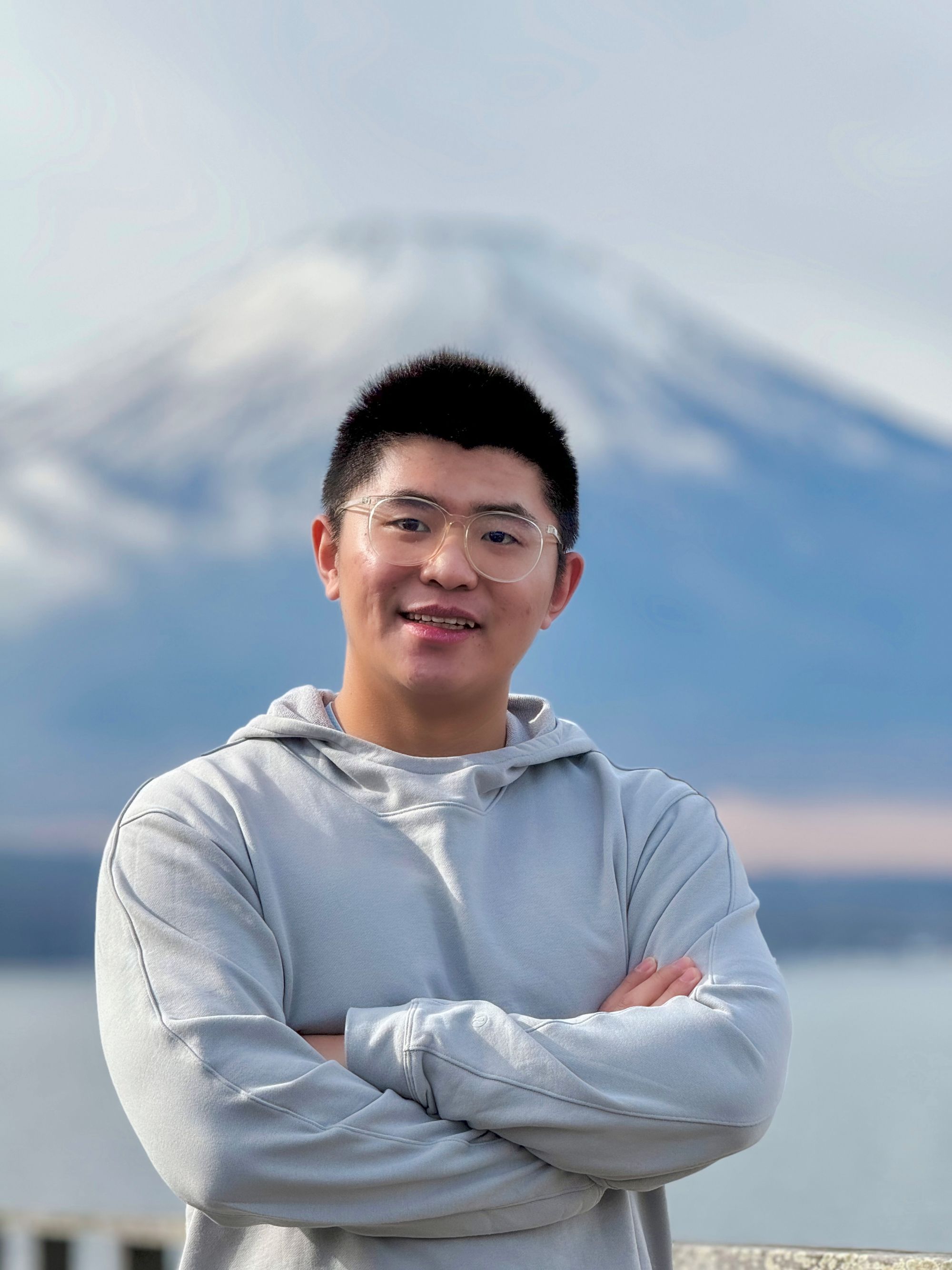
Zhou Yang brings inspiration, ethics and responsibility to his new role as assistant professor in the Faculty of Science. An expert at the intersection of software engineering and artificial intelligence, Yang is committed to teaching modern technology fairly and accurately – making students informed of both its capabilities and its limitations. Drawn to Edmonton’s vibrant energy and with his own experiences as an undergraduate student still guiding him, Yang is a welcome addition to the Science community.
Keep reading to get to know Zhou Yang better.
What brought you to the University of Alberta?
The University of Alberta and Amii are home to many AI researchers. I am excited by the collaborative and inclusive research environment here. The opportunity to work alongside experts across diverse fields allows me to explore interdisciplinary topics that I am passionate about. Edmonton feels like a welcoming and energetic city, with a strong sense of community. It is a great place to start something new and to grow over time.
Tell us a bit about your research program. What will you be studying?
My research sits at the intersection of software engineering and artificial intelligence. Primarily, I focus on "AI for software engineering," exploring how large language models can help developers build software more efficiently and reliably. The ACM Special Interest Group on Software Engineering (SIGSOFT) recognizes my work as setting “a new standard for how the software engineering community understands and engineers trustworthiness in large language models for code, systematically framing robustness, security, privacy and ecosystem-level concerns as concrete, measurable engineering requirements, and by pairing that framing with rigorous empirical methods.” Conversely, I also apply software engineering methodologies to improve AI. I am dedicated to evaluating and ensuring the safety and correctness of emerging AI systems, such as reinforcement learning-based controllers used in robotics. Ultimately, my goal is to transform AI from a black-box novelty into a powerful, trustworthy tool for developers.
What inspired you to enter this field?
My inspiration stems from my early struggles as an undergraduate student and a novice developer. I remember spending hours debugging a program, only to realize the error was a simple "full-width" comma that prevented the code from compiling. Back then, I constantly wished for an "omnipotent mentor" who could instantly spot these issues and guide me. I realized this need for "code intelligence" is shared by many developers. As I learned more about AI, I became convinced of its potential in software engineering. However, I also recognized that current AI models have limitations and can introduce new "trustworthiness issues." This paradox drives me to improve these systems, ensuring they truly empower developers rather than misleading them.
Tell us about your teaching. What courses will you be teaching, or what is your philosophy when it comes to teaching?
I often joke that I teach two courses with seemingly contradictory goals. In Introduction to Software Engineering (CMPUT 301), I teach undergraduates how to build software to launch their careers. In my graduate course, AI for Software Engineering (CMPUT 663), we explore technologies that some fear might automate those very careers away! In reality, the software industry is evolving faster than ever. My philosophy is that education must adapt to this pace.
When I teach fundamental concepts, I always contextualize them with modern AI: explaining where AI can assist and, crucially, where it cannot. My goal is to train students not just to be coders, but to be "modern developers" who can effectively leverage AI as a force multiplier.
Is there anything else you'd like to share?
A small fun fact about my name: my full name is Yang Zhou. In Chinese, the family name comes first: “Yang” is my surname and “Zhou” is my given name. And there’s a coincidence I still find amusing: I completed my undergraduate degree at Yangzhou University, located in Yangzhou city. So for a while my email signature looked like a word puzzle.