New assistant professor Anna Simonsen deep dives into studying symbiosis in nature
9 March 2026
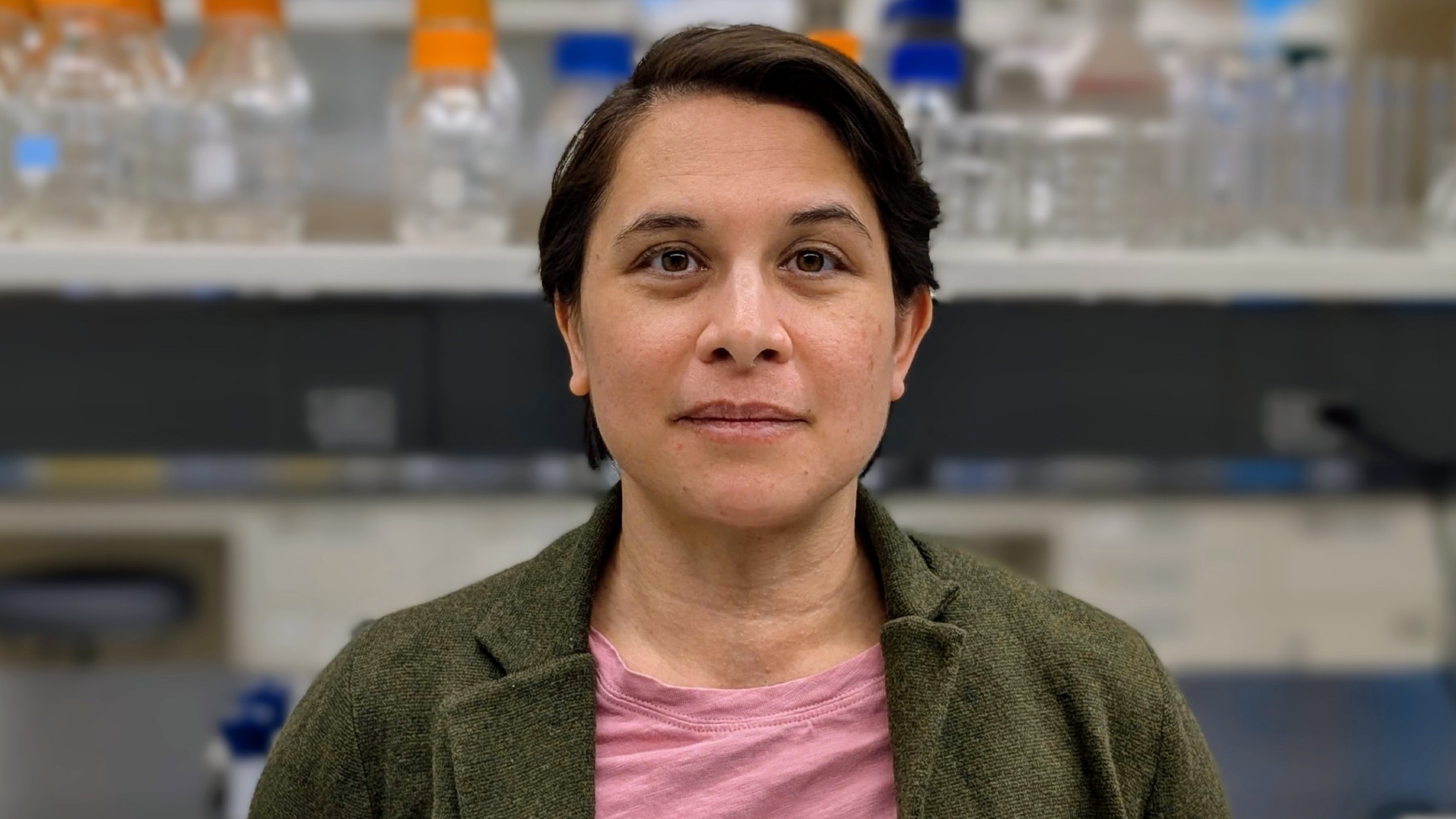
If you’ve ever wanted to know more about the connections between plants and climate change, just ask new assistant professor Anna Simonsen. Simonsen joins the Department of Biological Sciences with inspiring plans for her research and its potential to address current and future global challenges like food security and environmental sustainability. With the University of Alberta positioned in an ideal geographical spot to help fuel her research, Simonsen is well-equipped to not only benefit the world around her, but the lives of the students who will learn from her.
Keep reading to get to know Anna Simonsen better.
What brought you to the University of Alberta?
There are many reasons why I am excited to start and establish my lab and research program here at the University of Alberta. The Department of Biological Sciences in the Faculty of Science is one of the largest and most scientifically diverse departments of its kind in Canada, covering a broad range of research areas in ecology, microbiology, biotechnology, molecular biology, genetics, plant biology, physiology and cell biology systematics and evolution. My research sits at the intersection of at least four of these areas, and I am already experiencing the benefits of collegial collaborations and synergies within the department, as well as with other faculties such as the Faculty of Agricultural, Life & Environmental Sciences.
The University of Alberta is positioned in an important geographic context for my research program. Alberta sits at the intersection of prairies, parkland, farmland and boreal forest. Edmonton, the northernmost city in North America with a population over one million, is warming approximately twice as fast as the global average. This geographic position offers important launching points to address pressing questions, such as how interactions between plants and microbes are impacted by changes in the environment and climate.
Finally, another large reason I came to the University of Alberta is that my research program studying legumes has direct relevance for Alberta’s agricultural economy as the province is one of Canada's largest producers of pulse crops (i.e. peas, lentils and other legumes).
Tell us a bit about your research program. What will you be studying?
Fundamentally, my lab studies how plants and microbes live together. When we think of microorganisms, we often think about pathogens and disease. However, the vast majority of microorganisms out there are not harmful, and in fact all plants and animals have evolved to become dependent on microorganisms for their survival. For example, humans are highly dependent on microbes inside our gut to break down and metabolize our food. So, broadly speaking, my lab studies the microorganisms that make up the “digestive system” of a plant, which are instead externally located in the soil surrounding its roots. One area my lab focuses on is the symbiotic relationship between legumes and a beneficial bacteria called rhizobia in special root structures called “nodules.” Through the symbiosis with legumes, rhizobia are able to perform an important metabolic capability, which is converting inert nitrogen in our atmosphere into a nutrient that plants can use to grow – a process called “nitrogen fixation.” My lab’s research is dedicated to how this symbiosis works, why it matters and what happens to it as our climate changes.
This mutualistic relationship is important to understand when we think about the broader challenges of global food security and environmental sustainability. As our global population grows, we will need to produce more food with fewer resources while minimizing environmental damage. By understanding how plants and mutualistic microbes benefit from each other, the research in my lab is working towards finding solutions to increase efficiency in food production and reduce our reliance on synthetic fertilizers, which are known to cause nutrient pollution and accelerate climate change through nitrous oxide emissions.
What inspired you to enter this field?
The phenomenon of symbiosis in nature has always captivated me. Since I first started doing research in legumes and rhizobia during graduate school, I have been hooked on this biological system ever since. Rhizobia are a part of a group of nitrogen-fixing bacteria called “diazotrophs.” Diazotrophs have solved this seemingly impossible problem. Nitrogen makes up 78 per cent of the atmosphere, yet most living things can't use it. The triple bond holding N₂ together is one of the strongest in nature. Breaking it industrially (the Haber-Bosch process) requires temperatures around 400-500°C and pressures of 150-300 atmospheres. Yet a tiny bacterium sitting inside a plant root nodule does the same thing at ambient temperature and pressure, using an enzyme called “nitrogenase” that evolved billions of years ago. But this chemical conversion does not occur in a vacuum – it is made possible through the bacteria’s partnership with its host plant. Rhizobia fix nitrogen inside legume roots because both organisms have co-evolved over millions of years into a finely tuned symbiotic partnership. Across nature, thousands of legume and rhizobia species have developed their own distinct versions of this partnership, each with specialized molecular dialogues between host and microbe symbiont. Many of these remain uncharacterized, and uncovering them is one central goal of my research program.
Tell us about your teaching. What courses will you be teaching, or what is your philosophy when it comes to teaching?
I have broad interests in a range of topics that span multiple disciplines in Ecology and Evolutionary Biology and Microbiology across a diversity of organisms. I will be teaching “Diversity and Evolution of Microbial Life” (BIOL 322), where students will learn about the evolutionary forces responsible for the diversity of microscopic life forms, both prokaryotic (bacteria and archaea) and eukaryotic (protists, fungi, phytoplankton). It is an exciting course to teach because we will also get to talk about theories on the origin of cellular life, which is always a fascinating topic.
My main goals as a teacher are to ensure that students gain:
- an excitement and appreciation for biology (regardless of the specific discipline taught),
- fundamental understanding of core concepts, theories and facts, and
- an understanding of the importance of the teaching material in their lives beyond the classroom.
As a researcher, I have had great opportunities to discover exciting new biological insights, and what gives me great satisfaction is the opportunity to pass on that new knowledge to both graduate and undergraduate students.
Is there anything else you'd like to share?
You can learn more about research I have published from my Google Scholar profile.