Nurturing the future of pandemic expertise
Sasha Roeder Mah - 8 January 2026
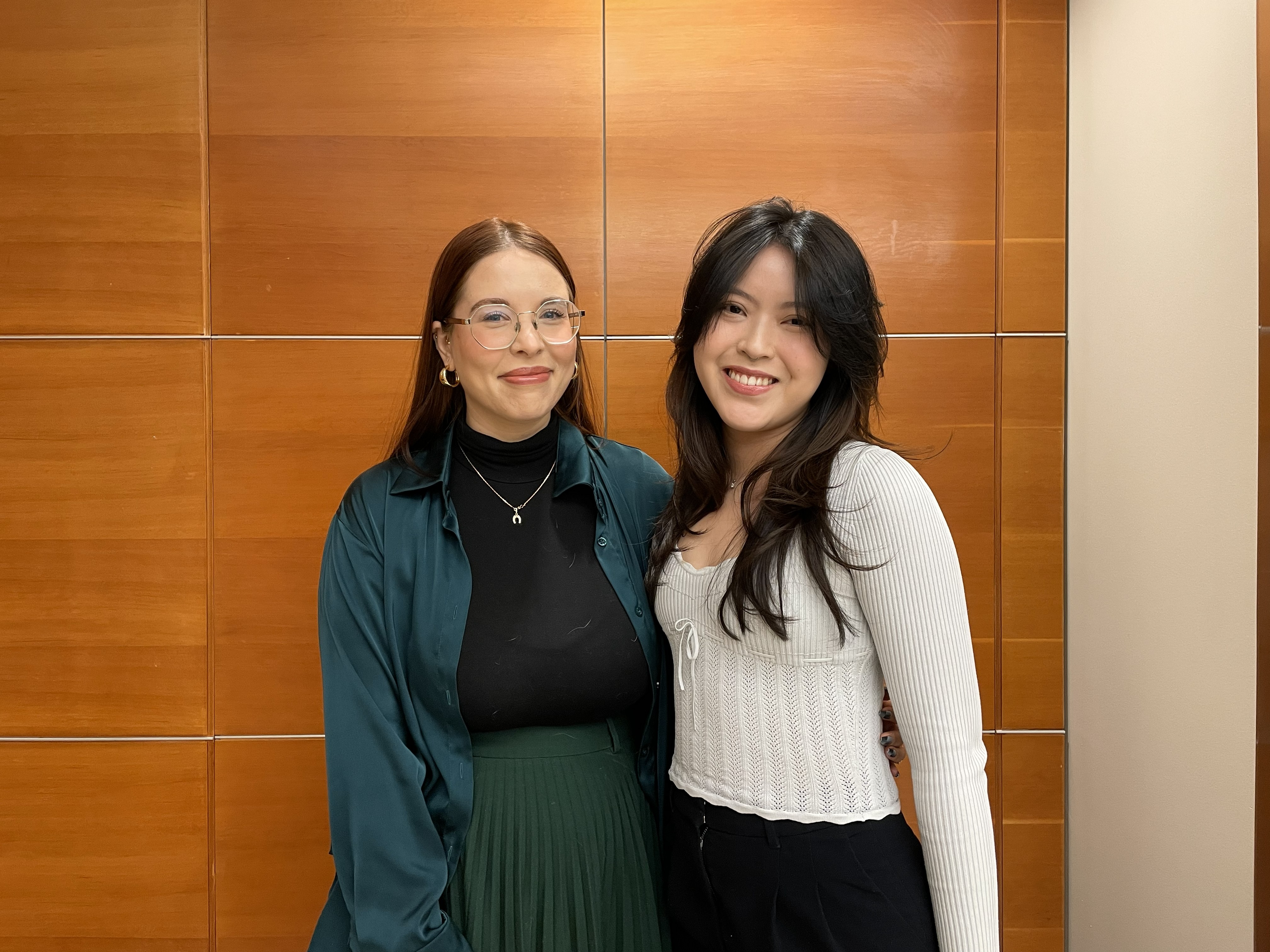
Ksenia Rybkina and Hery Lee (L to R)
When PhD candidate Hery Lee joined the lab of Matthias Götte, she also, by extension, became part of the Striving for Pandemic Preparedness - Alberta Research Consortium (SPP-ARC), where Götte is director. In the three years since, both Lee and SPP-ARC have grown and evolved — and in large part she credits the consortium’s investment in learner training for the research and career paths that have opened for her.
SPP-ARC launched in 2022 as part of the Government of Alberta-funded response to the COVID-19 pandemic. The U of A-based group pulls together scientists from across the colleges of health science and natural and applied sciences to enable more rapid responses to the next pandemic, through research and training on vaccines and antiviral drugs.
The research work being done within this group is important to the health of Albertans in outbreak situations with emerging viruses, but equally central to their mandate is the training of highly qualified personnel, says Ksenia Rybkina, director of training. This tends to fall into two main areas: exposure to cutting-edge technologies and career preparation.
The big picture
“With most academic training, you become an expert in a very specific field,” says Rybkina. Working in pandemic preparedness also requires a great deal of interdisciplinary knowledge. This was driven home by COVID-19, she adds. “When it comes to those who study infectious disease, it used to be that you could be an expert in either just the host or just the pathogen. But now you really need to have a better idea of how the two interact.” SPP-ARC’s approach to training reflects this shift from siloed expertise to a collaborative model, where multiple scientific fields intersect to solve complex challenges.
Monthly seminars and research retreats get trainees from different departments and faculties into the same room to contextualize their work. “We get a lot of great feedback that they’re so grateful for that opportunity,” says Rybkina. In fact, the last annual retreat, held in Banff, was opened to researchers from across the country. To have virologists, chemists, immunologists and structural biologists at the same event was an “incredibly enriching” experience for SPP-ARC trainees. “This kind of thing makes for much more well-rounded academics,” says Rybkina.
Trainees can also apply for funding to visit and learn from other researchers around the world, often making them the first people in their lab to have heard of a new technology. This can spark new ideas for the more established researchers — thus the training comes full circle. In preparation for the launch of SPP-ARC’s cryo-EM facility, Lee spent three months as a visiting student at Rockefeller University, receiving hands-on training in the fundamentals of cryo-electron microscopy. Thanks to the travel and training grant, she was able to work closely in person with experts Seth Darst and Elizabeth Campbell, with whom she had collaborated virtually several years before. “This experience enabled me to bring structural biology expertise back,” she says, but it offered much more than that. “I expanded my technical skill set,” she says, but she also had the invaluable opportunity to expand her professional network — and has secured a postdoctoral position at Rockefeller.
Career prep
When Rybkina started in her role, she was surprised to discover how many SPP-ARC trainees were pondering a career outside academia. “In 2022, 90 per cent of our PhD and 100 per cent of master’s trainees were aiming for a career in industry,” she says, so she realized quickly that a big part of her job would be giving them the tools to pursue that. Expanding their technical knowledge and helping them become a bit more generalist was one important ingredient in that. The other? Exposure to the range of opportunities in industry and the “soft skills” that will help get them there.
Through industry round-tables and Q&A sessions with guest speakers, trainees can discover a “day in the life” of various careers, while beginning to build a professional network beyond the university. These sessions have the added benefit of showing trainees that being a generalist with good soft skills — flexibility, ability to work within a team, good communication skills — may be more valued outside academia than being a highly specialized expert.
What’s next?
“What can we do to help them develop these softer skill sets?” Rybkina’s goal for this new year is to answer that question with a focus on facilitating peer learning in science communication and knowledge translation.
By providing trainees with more opportunities to share their research, SPP-ARC hopes to empower them with the skills needed to present their knowledge in ways any audience can understand. “Scientists who might be used to talking only to other academics need to learn how they can contribute to the public discourse,” she says. “It’s almost like marketing your work.” This can be done through all kinds of creative mediums — such as graphics, elevator pitches and oral presentations — but regardless of the method, it starts with a respect for different audiences’ needs.
With SPP-ARC’s dual training focus on interdisciplinarity and career development, it’s no wonder trainees like Hery Lee are finding jobs around the world. “You can put them into any sector and they will be successful in a team-based environment,” says Rybkina. When they return to Alberta, they enrich our biomedical ecosystem. Ensuring there are opportunities here in Alberta and fostering local expertise remain central to SPP-ARC’s mandate. “We have so much talent here and we want to make sure we retain it.”
To stay in the know about SPP-ARC, join their mailing list here.