Harmony in hospitality
Maya Arun - 12 September 2025

Ocean view, Cuba
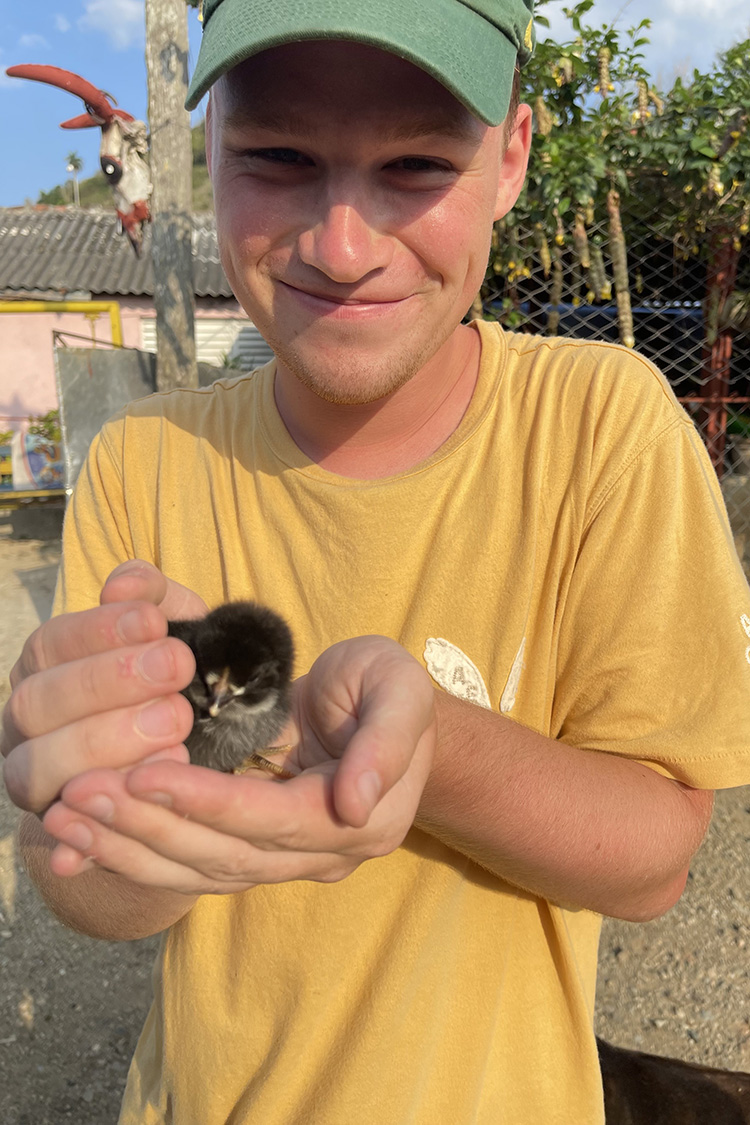
Brett holding a baby chick

Mountain view, Cuba
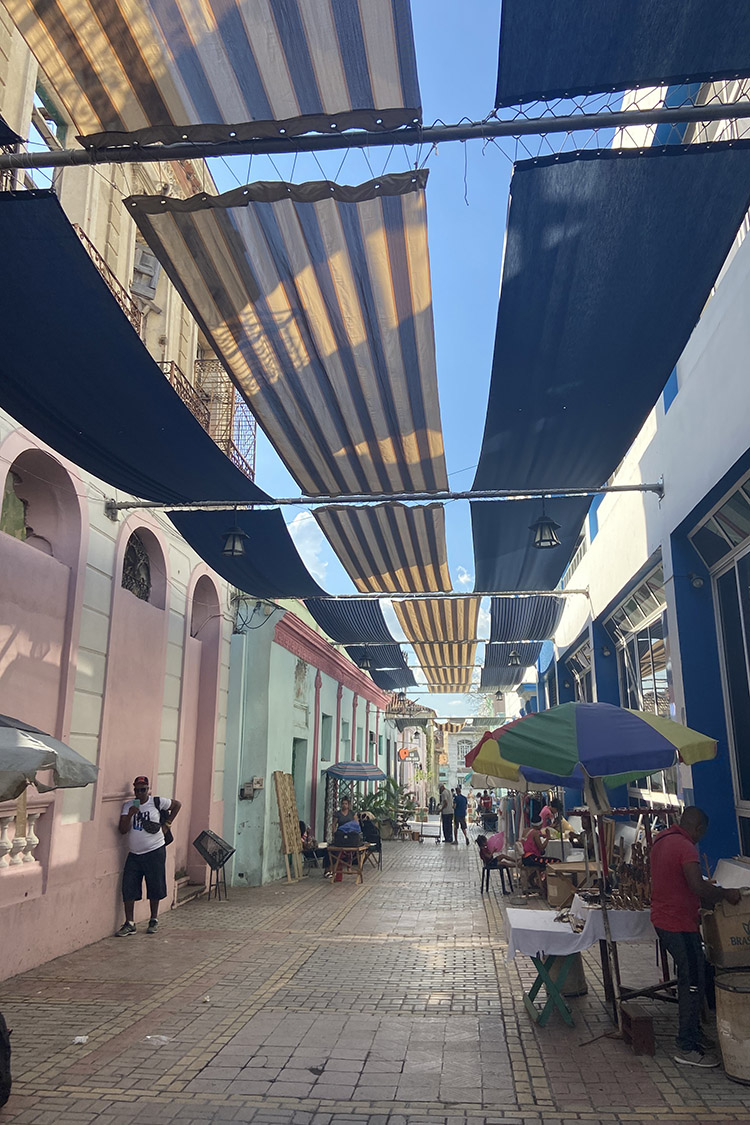
Street view, Santiago de Cuba
Santiago de Cuba is one of Cuba’s oldest cities, situated on the far southeast end of the island. Closer to Haiti than Havana, its culture is a unique blend of French-Haitian, Afro-Cuban, and Spanish influences. Bounded by the Sierra Maestra mountains to the east and the Caribbean sea to the west, the city offers the best of nature as well as culture.
Brett Siemens, a computing science major, studied at Universidad de Oriente through the faculty-led Santiago de Cuba program, a fourteen-week immersion into the study of Cuban history, politics and culture. In an interesting mix of courses, Brett took a practicum course on agricultural and coastal management, one on Cuban politics and government, another on the history of women in Cuba and of course, beginner’s Spanish.
It was more than just academically focused — Brett and his peers lived with Cuban families, in casa particulars, which are similar to a bed and breakfast. They all lived on the same street, with one to three students in a household.
“We were very much treated as part of the family. We got invited to a birthday party for one of our family members' sons. He turned six and it was just kind of like a lot of dancing, a lot of good food and lots of fun. It felt very personal and very inviting.”
Cuba’s sense of community transcended the boundaries of the household. People made it a point to be concerned about others. Whether it was mere discomfort or physical sickness, Brett’s well-being was prioritized over all else.
“I realized how in a lot of ways, Cuba is misrepresented in Western media and I think I was surprised at how hospitable Cuba was. There was a lot of adversity in Cuba's history in recent times and present times. And despite all that, it was a very welcoming place and somewhere that I felt very comfortable to live.”
Living among the locals roused Brett to the political and economic turmoil of the country and the hardships Cubans experienced. He and his peers were able to give back to the community in what little way they could. They were told to pack heavy, with things they would leave behind. This included basic necessities that can be difficult to acquire in Cuba: toiletries, clothes, suitcases and school supplies — a little of everything.
Brett found it hard to wrap his head around just how much people are affected by not having access to the things that we take for granted. It's hard to visualize a struggle that is so foreign to what you’re accustomed to — until you see it for yourself.
“Zip-lock bags are something that in Canada and other places, we think of as trivial — not something we would reuse and something we wouldn't really consider a luxury. But when we were giving things that we brought to Cuba away, zip-lock bags actually brought somebody to tears and so that was a big wake-up call for me that I completely took this for granted.”
The people of Cuba are not unlike their music — like voices singing in tandem and dancers effortlessly matching their movements, Cubans interact with a similar melodic harmony, their hospitality never waning.